
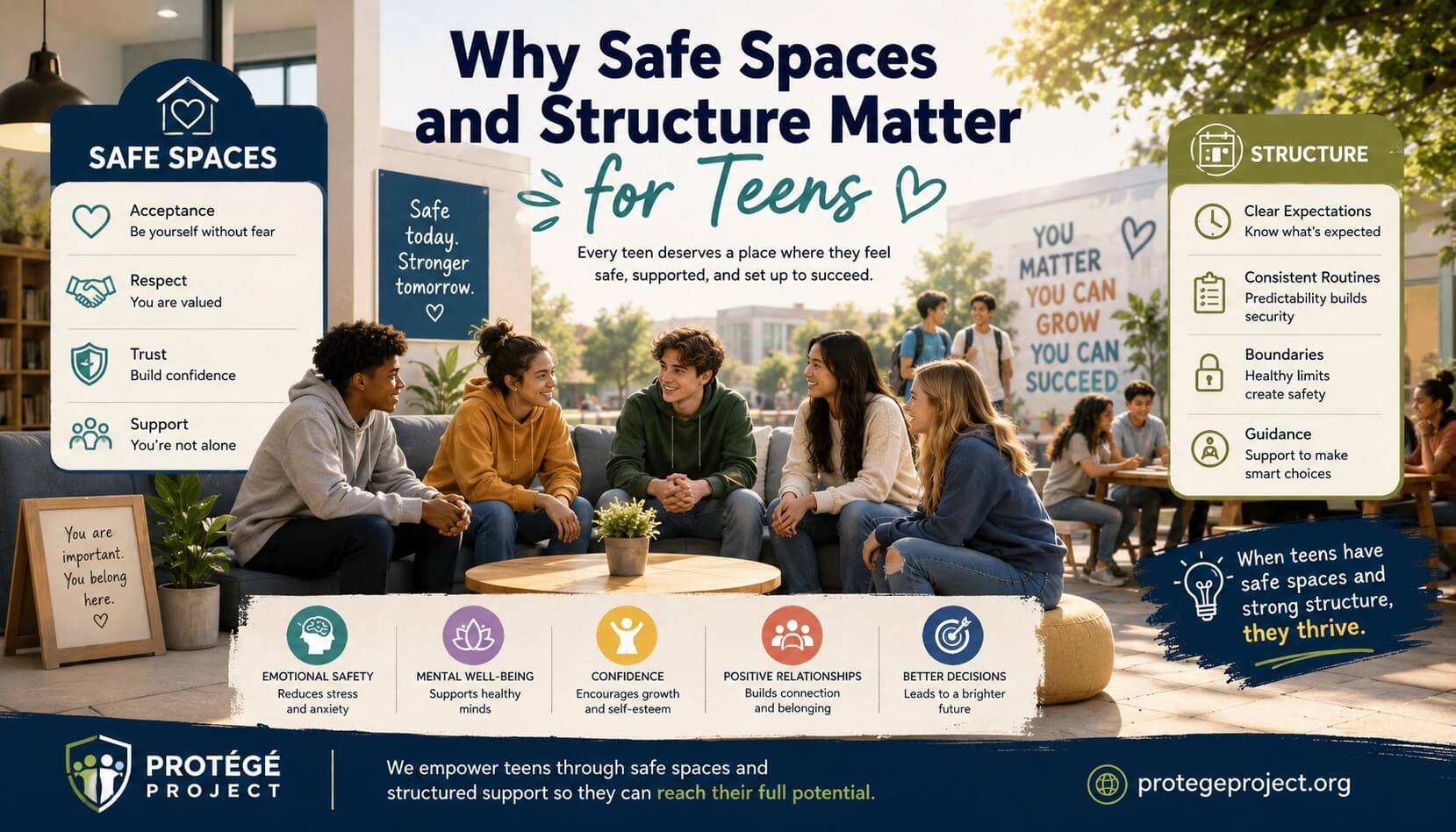
Teen years are filled with rapid emotional, social, and academic changes. During this stage of development, young people are learning how to manage responsibilities, build relationships, and understand who they are becoming. While independence is important, teens also need guidance, consistency, and environments where they feel secure.
Safe spaces and structured routines play a major role in helping teenagers develop confidence, emotional stability, and healthy habits. When young people have access to supportive environments and positive mentorship, they are more likely to succeed academically, socially, and emotionally.
Organizations like Protégé Project recognize that youth development is strongest when teens are surrounded by encouragement, accountability, and opportunities for personal growth.
What Does a Safe Space Mean for Teens?
A safe space is more than a physical location. It is an environment where teens feel respected, supported, and comfortable expressing themselves without fear of judgment or negativity.
Safe spaces for youth often include:
- Mentorship programs
- After-school activities
- Community youth centers
- Leadership groups
- Sports and team programs
- Academic support environments
In these settings, teens can ask questions, share challenges, and build positive relationships with peers and mentors.
Emotional safety is especially important during adolescence because teens are still developing self-confidence and communication skills. A supportive environment helps reduce stress and encourages healthy personal growth.
Why Structure Is Essential During Adolescence
Structure gives teens consistency and direction during a time when emotions and responsibilities can feel overwhelming. While teenagers often seek independence, they still benefit from routines and clear expectations.
Structured environments help teens:
- Develop time management skills
- Stay focused on goals
- Build discipline and accountability
- Reduce unhealthy habits
- Improve emotional regulation
- Balance school and personal responsibilities
Without structure, many teens struggle with motivation, organization, and decision-making. Consistent routines create stability and help young people feel more in control of their daily lives.
For example, after-school mentorship programs provide scheduled activities that keep teens engaged in productive and positive environments during critical afternoon and evening hours.
The Connection Between Safe Spaces and Emotional Development
Teen emotional development is deeply influenced by the environments surrounding them. Young people who constantly experience criticism, instability, or negative peer pressure may struggle with confidence and self-worth.
Safe and supportive environments help teens:
Build Emotional Confidence
When teens feel heard and respected, they become more comfortable expressing emotions and communicating openly.
Develop Healthy Coping Skills
Supportive mentors and structured programs can teach teens how to manage stress, frustration, and disappointment in productive ways.
Reduce Social Anxiety
Positive group environments encourage interaction, teamwork, and relationship-building, helping teens improve social confidence.
Feel a Sense of Belonging
A strong community connection can reduce feelings of isolation and encourage positive engagement.
These emotional benefits often lead to better academic focus, healthier friendships, and stronger self-esteem.
How Mentorship Creates Stability for Teens
Mentorship is one of the most effective ways to provide guidance and structure during adolescence. A trusted mentor offers consistency, encouragement, and accountability that many teens need while navigating challenges.
Mentors can help teens:
- Set realistic goals
- Develop leadership habits
- Improve communication skills
- Stay motivated academically
- Build confidence through encouragement
- Learn responsibility and discipline
Consistent mentorship also creates trust. Teens are more likely to open up and seek guidance when they know adults genuinely care about their success.
Protégé Project focuses on creating supportive mentorship opportunities that help young people grow in safe and encouraging environments.
The Importance of Positive Peer Environments
Teens are heavily influenced by the people around them. Positive peer groups can encourage motivation, teamwork, and healthy decision-making, while negative environments can increase risky behaviors and emotional stress.
Structured youth programs often help teens connect with peers who share positive goals and interests.
Benefits of healthy peer environments include:
- Better teamwork skills
- Increased confidence
- Improved communication
- Greater accountability
- Stronger social development
- Reduced exposure to harmful influences
Activities such as sports mentorship, leadership workshops, and community projects create opportunities for teens to build supportive friendships while developing important life skills.
Why After-School Hours Matter
The hours immediately after school are often when teens are most vulnerable to boredom, negative influences, or unhealthy habits. Structured after-school activities provide productive alternatives that keep youth engaged and focused.
After-school programs can support teens by offering:
- Homework assistance
- Mentorship and guidance
- Physical activity and sports
- Leadership development
- Team-building activities
- Safe social interaction
These programs also give parents peace of mind knowing their children are in supportive and supervised environments.
For organizations focused on youth empowerment, after-school engagement is one of the most effective ways to encourage consistency and positive growth.
Teaching Responsibility Through Structure
Many life skills are learned through repetition and routine. Structured youth environments help teens understand the importance of accountability, preparation, and follow-through.
Teens benefit from learning how to:
- Arrive on time
- Complete responsibilities
- Respect group expectations
- Communicate effectively
- Work collaboratively
- Manage personal goals
These habits may seem simple, but they create the foundation for future academic, professional, and personal success.
Programs centered on leadership development and mentorship often reinforce these behaviors through regular activities and team participation.
Supporting Teens Through Challenges
Every teenager faces challenges, whether related to school, friendships, confidence, or family stress. Safe spaces provide support systems that help youth work through those difficulties in healthy ways.
Supportive environments can help teens:
- Process emotions constructively
- Ask for guidance without fear
- Learn conflict-resolution skills
- Build resilience
- Develop problem-solving abilities
Teens who feel supported are often more willing to seek help when needed instead of withdrawing emotionally or acting out negatively.
This type of emotional support can make a significant difference in long-term youth development.
How Communities Benefit From Supporting Teens
When communities invest in safe spaces and structured youth programs, the impact extends beyond individual teens.
Strong youth support systems can contribute to:
- Higher student engagement
- Greater community involvement
- Positive leadership development
- Reduced risky behavior among youth
- Stronger family support networks
- More confident future leaders
Communities thrive when young people are encouraged to grow in environments built around mentorship, discipline, teamwork, and emotional support.
This is why many youth organizations continue prioritizing mentorship programs, leadership activities, and structured development opportunities for teens.
Helping Teens Build Confidence for the Future
Confidence is not developed overnight. It grows through encouragement, positive experiences, and consistent support.
Safe and structured environments help teens discover their strengths while learning how to navigate challenges with resilience and maturity.
When young people have access to:
- Positive role models
- Clear expectations
- Encouraging mentorship
- Healthy peer relationships
- Leadership opportunities
- Community support
they are better prepared to succeed in school, relationships, and future careers.
Protégé Project continues supporting youth development by creating programs that help teens build confidence, responsibility, and leadership skills in positive community environments.
Conclusion
Safe spaces and structure matter because teenagers need stability, guidance, and encouragement during one of the most important stages of life.
Supportive environments help teens build emotional resilience, stronger communication skills, healthy routines, and confidence that can shape their future in meaningful ways.
Whether through mentorship, after-school programs, leadership activities, or community engagement, structured youth support creates opportunities for long-term growth and success.
Learn more about youth mentorship and leadership programs at Protégé Project: https://protegeproject.org/
