

Table of Contents
- Why Vetting Matters in Mentorship Programs
- Step 1: Define Program Goals and Participant Eligibility
- Step 2: Establish Mentor Qualifications and Eligibility Criteria
- Step 3: Design Your Mentor Recruitment and Identification Process
- Step 4: Create a Screening and Selection Process
- Map the workflow before you screen anyone
- Screen to the role, not to a single checklist
- Application and intake process
- Reference checks and background verification
- Criminal history and sex offender registry checks
- Formal interviews and risk assessment
- Score against a rubric, not a gut feeling
- Fairness, accessibility, and bias reduction
- Privacy, consent, and handling screening records
- After the interview: the decision
- Questions to Ask a Youth Mentorship Program
- Youth Mentorship Program Safety Policies and Ongoing Supervision
- Mentor-Mentee Matching Process and Compatibility
- Frequently Asked Questions
Last Updated: October 8, 2026
Why Vetting Matters in Mentorship Programs
A strong mentorship program vetting process protects young people and builds trust with families. At The Protégé Project, vetting is the foundation of everything we do.
Vetting is a series of decisions designed to catch red flags early: background checks plus motivation, reliability, communication, and commitment to mentees’ growth. This guide walks through the entire mentorship program vetting process explained, from defining goals to matching mentors with mentees.
Step 1: Define Program Goals and Participant Eligibility
Before you vet anyone, know who you’re trying to reach and what you’re trying to accomplish, this shapes every screening decision.
Define your core mission: academic support, leadership development, confidence building, or social connection.
Define what mentors need to bring, a mentor for a 7-year-old needs different skills than one for a 16-year-old, and homework help differs from sports coaching.
Step 2: Establish Mentor Qualifications and Eligibility Criteria
Your mentor qualifications set the bar. Be specific, vague standards lead to inconsistent decisions.
Strong mentors typically share these traits:
- Genuine interest in supporting young people’s growth
- Reliability and consistent availability
- Clear communication skills
You may also want experience-based criteria: prior youth work, or professions like teachers, coaches, and social workers. The Protégé Project values mentors who understand the communities we serve. Consider logistics too: schedule commitment, transportation, background check eligibility, and willingness to attend training.
Step 3: Design Your Mentor Recruitment and Identification Process
You can’t vet people who don’t apply, so recruit through multiple channels:
- Community partnerships and local organizations
- Social media and your website
- Word-of-mouth referrals from current mentors
Each channel reaches different people: college partnerships bring younger mentors, corporate programs bring working professionals, and referrals bring people already embedded in your community. Be clear about the commitment, the vetting process, and timelines. Transparency attracts serious candidates and filters out those not ready. The Protégé Project recruits mentors who see mentorship as meaningful work, not a side project.
Step 4: Create a Screening and Selection Process
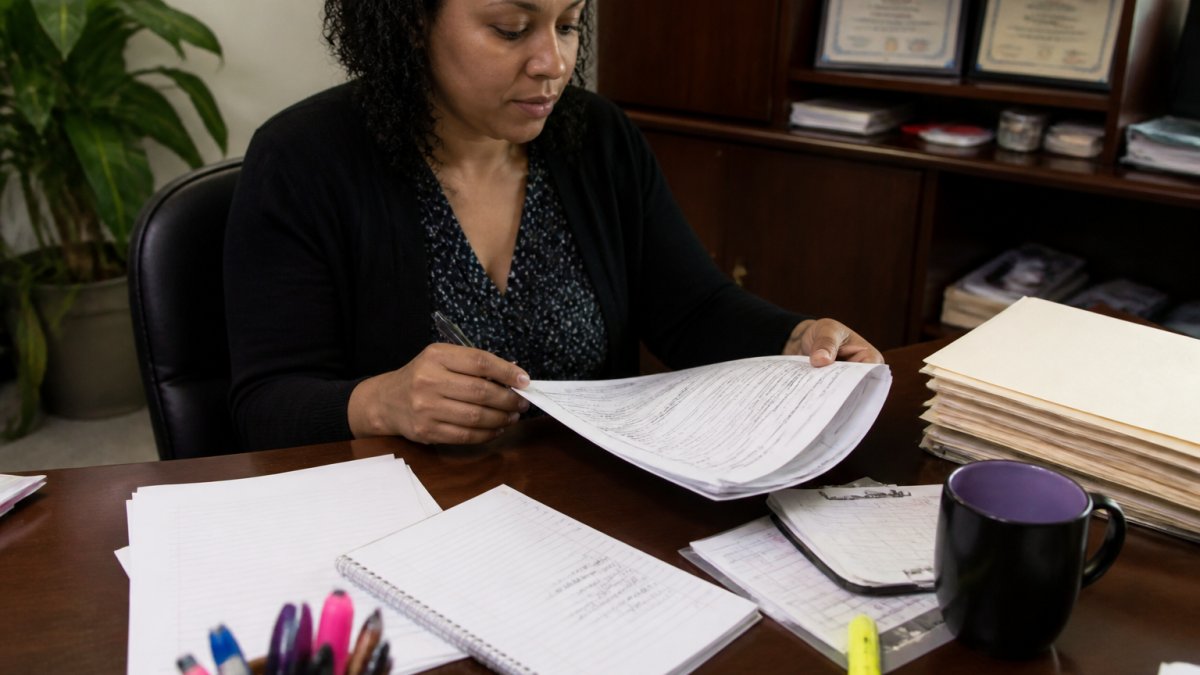
This is where the mentorship program vetting process becomes real. The difference between running checks and managing risk is showing, step by step, how a candidate moves from application to approval, conditional acceptance, or rejection.
Map the workflow before you screen anyone
Write your process as a linear pipeline with named decision points:
- Application received, logged with date and channel.
- Completeness review, missing fields trigger a request, not a rejection.
- Intake conversation, 15 to 20 minutes; scored on communication and availability.
- Reference outreach, at least two contacts, attempted within five business days.
- Background and registry checks, initiated only after the candidate signs a consent form.
- Structured interview, two staff, same question set for every candidate.
- Committee decision, approve, approve with conditions, hold for more information, or decline.
- Conditional acceptance, additional training, a co-mentoring period, or a restricted first placement.
- Final approval and file closure, records stored per your retention policy.
Each gate needs an owner and target turnaround: two to four weeks for low-risk roles, four to eight weeks for unsupervised one-on-one contact with minors.
Screen to the role, not to a single checklist
One universal checklist is the most common mistake. Screening depth should scale with the risk the role carries. Build a tier matrix:
- Tier 1, Group or public settings. A mentor who only ever works inside a supervised classroom or at a public event with staff present. Baseline checks, one reference, group orientation.
- Tier 2, Regular but supervised contact. Weekly sessions in a program building, staff nearby. Full background and registry checks, two references, structured interview, full training.
- Tier 3, Unsupervised or one-on-one contact. Off-site activities, transportation, private messaging. Everything in Tier 2 plus a driving record check if the mentor transports youth, a home or site visit where applicable, a longer probationary period, and more frequent supervision.
Age matters too: programs serving younger children warrant the strictest tier for one-on-one contact, while teen-focused programs may weight interview judgment more heavily. Let state requirements set the floor, then set your policy above it for higher-risk roles.
A clean background check is not a clearance to work unsupervised with minors. It only tells you what is in the record. It says nothing about judgment, boundaries, or how someone behaves when no one is watching.
Application and intake process
Start with a written application that reveals motivation, experience, and fit. Include:
- Basic information (name, contact, availability)
- Experience working with youth
- Reasons for wanting to mentor
Keep it to one to two pages, enough to screen without creating barriers. Offer multiple formats, printable PDF, online form, and phone option, to reduce drop-off, and say up front if you require specific documents.
After submission, conduct a 15- to 20-minute intake conversation to confirm information, answer questions, and assess communication and availability. Document everything, including notes and initial impressions.
Reference checks and background verification
References reveal how someone behaves in real situations. Ask for at least two, ideally people who’ve seen the applicant work with young people or in positions of trust.
Contact references by phone, not email, a conversation reveals tone, hesitation, and depth. Ask:
- How long have you known this person?
- Can you describe their reliability and follow-through?
- How do they handle conflict or difficult situations?
Listen for what they don’t say: hesitation and vagueness matter. Score each reference on a simple scale so notes are comparable.
Criminal history and sex offender registry checks
This is non-negotiable.
Some states allow online checks; others require law enforcement or a third-party screener.
A criminal record doesn’t automatically disqualify someone, context matters. A 20-year-old shoplifting charge differs from a recent assault conviction.
Anyone with a history of violence, sexual abuse, or child endangerment should not mentor. Full stop.
Publish your disqualification policy in plain language before candidates apply. It is fairer to applicants and it saves your team from having to make the same judgment call under pressure.
Formal interviews and risk assessment
The formal interview is your deepest look at a candidate, assessing judgment, emotional maturity, and commitment.
Interview in person when possible with at least two staff present, using consistent questions for fair comparison.
Ask about:
- Why they want to mentor and what they hope to accomplish
- How they’d handle specific scenarios (a mentee struggling academically, a mentee disclosing family problems, a mentee testing boundaries)
- Their approach to confidentiality and mandatory reporting
Pay attention to how they answer: Do they take questions seriously, think before responding, and show genuine care for mentees’ wellbeing?
Score against a rubric, not a gut feeling
Gut feeling is a useful alarm but a poor selection tool, it drifts between interviewers and rewards people who resemble your existing team. Build a short rubric and score every candidate on the same dimensions:
- Motivation and fit, why this program, why now, and whether the stated goals match the role.
- Reliability signals, history of follow-through, punctuality, and how they talk about past commitments.
- Communication, clarity, listening, and how they handle being asked to explain themselves.
Use a 1 to 5 scale with a minimum threshold set in advance. When interviewers disagree, resolve it with a third reviewer or follow-up conversation rather than averaging it away.
Fairness, accessibility, and bias reduction
An inconsistent vetting process is neither fair nor legally safe. Practical safeguards:
- Same questions, same order, same rubric for every candidate in a given tier.
- Separate the decision from the interview. Have interviewers write scores before discussing the candidate with each other.
- Do not use arrest records alone as a disqualifier (Arrest and Conviction Records: Resources for Job Seekers, Workers and Employers). Arrests are not convictions, and fair-chance rules govern when organizations may consider criminal history.
Consistency is the fairness mechanism. If two candidates in the same tier get different questions, different interviewers, and different scoring, you cannot defend the outcome, to an applicant, to a funder, or to a family.
Privacy, consent, and handling screening records
Screening generates sensitive data. Treat it that way.
- Get written consent before any background or registry check, and explain what you’ll check and why.
- Collect the minimum and restrict access to staff with a defined screening role.
- Store securely in locked files or access-controlled digital storage, not a shared drive.
After the interview: the decision
After the interview, compare notes with the other interviewer. Do you both feel confident? If something feels off, it probably is.
Then make one of four calls and record it:
- Approve, move to training and matching.
- Approve with conditions, for example, a co-mentoring period, a restricted first placement, or additional training before solo contact.
- Hold, you need more information, such as a missing reference or a clarification on a disclosure.
A decline is not a failure, it’s the process working. The goal is to approve the right people and show your work when a family asks how you decided.
Questions to Ask a Youth Mentorship Program
Families ask hard questions when evaluating a mentorship program. Be ready to answer clearly.
What happens if there’s a problem? Describe your process for handling concerns, including mentor misconduct.
How do you measure success? Share concrete outcomes: academic improvement, attendance, mentee feedback, family satisfaction.
How do you keep mentors accountable? Explain supervision, regular check-ins, feedback, and performance standards.
Youth Mentorship Program Safety Policies and Ongoing Supervision
Vetting is the start; ongoing supervision keeps your program safe. Most programs treat the background check as one-time and never revisit it, that’s the gap where problems live.
Write the policies down
Establish clear policies on:
- Confidentiality and privacy
- Appropriate boundaries between mentors and mentees
- Communication methods (in-person only? Can mentors text or call?)
Train mentors on these policies at orientation, review them regularly, and have every mentor sign an annual acknowledgment so there’s a dated record of the current version.
Re-screening and eligibility renewal
Set a re-screening cycle and put it on a calendar:
- Annual, a signed self-attestation that nothing disqualifying has changed, plus a re-check of the sex offender registry.
- Every one to three years, a full criminal history re-check, depending on your state’s rules and the mentor’s tier.
- Immediately, a re-check triggered by an event, such as a new arrest, a protective order, a change in the mentor’s household, or a report from a mentee or parent.
Define what happens when eligibility changes. A mentor who moves, changes jobs, loses a driver’s license, or takes a new role may need re-tiering, and moving from supervised groups to one-on-one contact requires the higher tier’s checks before the change takes effect.
A mentor who was cleared two years ago for a group role is not automatically cleared today for unsupervised one-on-one contact. Re-tier before you re-assign.
Incident reporting and response
Every mentor, mentee, and family member should know how to report a concern. Publish a simple path:
- Report, a phone number, an email, and an in-person option. No one should have to guess who to tell.
- Acknowledge, confirm receipt within one business day.
- Triage, decide whether the concern requires immediate suspension of contact while it is investigated.
- Investigate, gather statements, review records, and consult legal counsel where the concern involves suspected abuse or neglect.
- Resolve, document the outcome and any change to the mentor’s status.
- Follow up, check back with the reporter and with the mentee.
Mandatory reporting is not optional. If a mentor or staff member suspects abuse or neglect, they must follow state reporting requirements, train on this every year, not just at orientation.
Pausing or removing a mentor
Have a written procedure for removing a mentor from contact that doesn’t depend on the mentor’s cooperation.
- Immediate pause, used when there is an allegation of harm, a safety concern, or a new disqualifying event. Contact stops the same day. The mentee is reassigned or supported separately.
- Administrative pause, used while a concern is reviewed or while a mentor is unavailable for an extended period.
- Removal, used when the concern is substantiated, when the mentor violates policy, or when the mentor can no longer meet the commitment.
Tell the mentor in writing what’s happening and why, within legal counsel’s limits. Tell the mentee and family what they need to know in age-appropriate terms, never leave a mentee wondering why their mentor disappeared.
Supervision that actually catches problems
Supervision means regular check-ins, monthly conversations work well. Ask how things are going, listen for concerns, and provide feedback.
Go beyond the check-in with practices that surface issues earlier:
- Observe a session at least once per quarter for Tier 2 and Tier 3 mentors.
- Ask mentees directly whether they feel safe, heard, and respected, and give them a way to answer that does not go through the mentor.
- Track patterns, not just incidents. Repeated cancellations, boundary drift in messages, or a mentee who suddenly goes quiet are all signals worth a conversation.
Document everything, training, supervision conversations, re-screening dates, and concerns. This protects your program and is the record you’ll need if a family, funder, or agency asks how you handled a situation.
Mentor-Mentee Matching Process and Compatibility
The best screening doesn’t matter if you match the wrong people. Compatibility drives results.
Consider these factors when matching:
- Age and developmental stage of the mentee
- Mentee’s interests and goals (academic, sports, social)
- Mentor’s strengths and experience
Don’t assume matches will work. Start with a trial period: a few meetings, then check in with both.
Be willing to rematch.
Building a strong mentorship program vetting process takes time, but it’s the best investment you can make.
Frequently Asked Questions
What should parents ask a youth mentorship program about its vetting process?
Parents should ask about background checks, reference verification, criminal history screening, and how mentors are selected. Request details on the program’s safety policies, mentor training requirements, and how matches are made between mentors and mentees. Ask how often mentors meet with participants, what supervision occurs, and how the program handles concerns or poor matches. Understanding the mentorship program vetting process helps ensure your son is in a safe, well-managed environment.
How do youth mentorship programs screen and match mentors with mentees?
Programs use a structured mentor-mentee matching process that considers personality traits, interests, goals, and communication styles. After screening applicants through background checks and interviews, program staff assess mentor experience, motivation, and reliability. They then match mentors with mentees based on shared interests, geographic proximity, and compatibility. This intentional approach to mentor selection increases the likelihood of successful relationships and reduces dropout rates.
What safety policies should a youth mentorship program have in place?
Youth mentorship program safety policies should include mandatory background checks, criminal history verification, and sex offender registry screening. Programs need clear guidelines on meeting locations, frequency of contact, and supervision protocols. They should have policies for handling disclosure of abuse, mandatory reporting procedures, and processes for addressing concerns about mentor conduct. Regular check-ins with mentees and periodic program evaluation also strengthen participant safety.
How can you tell if a mentorship program is successful?
Success indicators include improved academic performance, increased school attendance, and higher retention rates for both mentors and mentees. Programs should track participant outcomes like grades, behavior improvements, and confidence levels. Mentor retention and participant satisfaction surveys provide insight into program quality. Long-term follow-up data showing participants’ educational attainment, employment, or continued engagement in their communities demonstrates lasting impact.











Leave A Comment